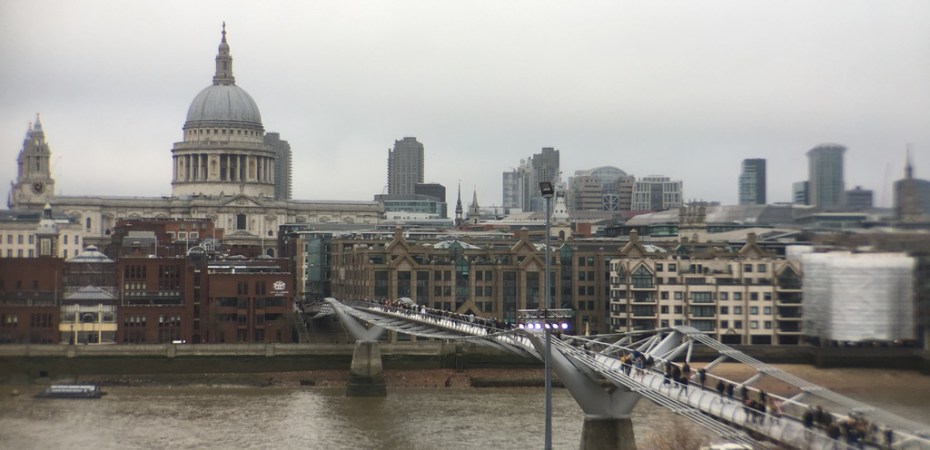
As I rode the bus home from church on the 17th of March I saw a sight which brought tears to my eyes. Each week, my journey takes me past the Battersea Mosque where I usually glimpse a handful of men through the upper window kneeling in the middle of prayers. This particular evening as the Mosque came into view I could see a Police officer standing guard at the entrance to the building, protecting those inside. As the bus continued past I could see that rather than the cluster of worshippers usually inside, the room was full to bursting. The space filled with individuals seeking comfort, and familiarity from those of the same faith as they grieved the horrific terrorist attack on their community in Christchurch, New Zealand on the 15th March.
I cannot comprehend what the Muslim community was feeling in that moment, but I do know that my heart breaks for them.
As the following couple of weeks unfolded you could see the world sending forth an outpouring of love, solidarity and righteous anger towards an attack which occurred during a time of prayer taking the lives of 50 and injuring a further 50. Thousands of non-muslim women donned head scarves around the New Zealand on the day of the memorial service and mass performances of the haka were performed across the country by school children and bikers alike. I found hope in seeing members of the Christian and Jewish communities globally standing outside of Mosques to keep watch so that worshipers would feel safe inside, and I found it refreshing to see how the New Zealand government reacted: Swiftly, decisively and with a firm emphasis on those affected by the tragedy, rather than the individual that had caused such trauma.
I also came across a more troubling trend on Facebook in response to the outpouring of support for the Islamic community. While these posts had different wordings and linked to a variety of source material the sentiment remained the same throughout all of them. The individuals posting ranged from those that I know have a very committed faith and those whom have never shown much of an interest in Christianity at all, each of the posts discussing the fact that the killing over 300 Christians in Nigeria since February had received very little media coverage and asking why it didn’t seem as though anyone cared when people were killing Christians. Now, I am not saying that people shouldn’t have been posting about these killings, absolutely they should be. It is important to draw attention to issues of genocide, and acts of violence against Christians that are currently going on around the world. However, those creating the posts had not done so in the time period leading up to the Christchurch shooting and once the media coverage began to shift away from the attack the posts about Christians being killed also stopped showing up on my newsfeed.
The tone of the posts that I saw and the timing during which they popped up on my feed indicated to me that there was something deeper going on beyond individuals wanting to highlight a massive human rights violation occurring in Nigeria. I saw parallels to the emergence of ‘All lives Matter’ after the ‘Black Lives Matter’ movement began to assert their voice into discussions around police shootings and race, and how #NotAllMen started cropping up on social media in response to #MeToo.
The problem with these countermovements is that they fail to recognize that by pointing out a problem you are not automatically invalidating everyone else. By coming alongside and supporting the Black Lives Matter movement I’m not then saying that all lives do not matter, I am simply acknowledging that there is an issue of systemic racism built into our society. I am understanding that by being white I do not have to worry about my skin colour making life more dangerous for me and acknowledging that I benefit from that system. In the same way by adding my story of assault into the conversation facilitated by the #MeTo movement, I am not saying that all men do these things, but I do think there is something to be said for the fact that everyone woman either has, or knows someone that has, been assaulted.
If the only time you are posting about a topic is to draw attention away from the one being discussed then I have to question the motives behind posting it. In this particular case you are being Islamophobic, if it’s during a #MeTo discussion you’re misogynistic and if it’s during a conversation around Black Lives Matter then you’re a racist. It sounds really harsh but it is the reality of what those actions mean. Social, religious, sexual, gender, or racial equality is not like pie, making more space for others does not actually take anything away from you. However, if you are used to benefiting from the whichever system it is that has caused these issues in the first place, if you are used to being the ‘default setting’ or the baseline for any discussion, then it can feel like you’re being attacked even though that is not the case.
In the instance of these posts, by highlighting the deaths of Christians in Nigeria and trying to bring focus to them over the deaths of Muslims in New Zealand it didn’t feel as simple as ‘look at these people dying here as well, look this also matters!’. It looked like an attempt to take away from the outrage and grieving taking place in solidarity with the Muslim community. These posts did not happen in a vacuum, they happened in a cultural context where there has been very intentional stigmatization and othering of those of Islamic faith particularly post 9/11. As ‘Christian’ nations in the West we have a very complex relationship with Islam and there is a lot of distrust and suspicion levelled towards those who practice the faith.
So why is it that Christians or Westerners would seem to have such an issue with Muslims. I read a book when it first came out entitled Not in God’s name: Confronting Religious Violence written by Jonathan Sacks (seriously go read this book, I keep on buying it and then giving it away). In the book he describes the relationship between the Abrahamic faiths as being that of a sibling rivalry. The narrative of Judaism, Christianity and Islam all assign a secondary role to the others because as each faith came along they expected the other one to die out. They were now the true inheritors of the faith and of God’s blessing.
For Christians when when Judaism didn’t die out it lead to the blood libels, the crusades and the holocaust. There was deep suspicion of those practicing the Jewish faith included blaming them for plagues, poisoning wells and the current antisemitic belief held by some that Jews control banks and the global economy. We love to think that we are more evolved than our ancestors but the reality is we simply see what is taking place around the world more quickly and have access to more ways to hurt one another.
Violence is what happens when you try to resolve a religious dispute by means of power. It cannot be done. Trying to resolve ultimate issues of faith, truth and interpretation by the use of force is a conceptual error of the most fundamental kind….Both sides may fight with equal passion and conviction, but at the end of the day, after thousands or millions have died, whole countries reduced to disaster zones, populations condemned to poverty and generations to hopelessness, after the very enterprise of faith has been degraded and disgraced, no one is a millimetre closer to God or salvation or illumination. You cannot impose truth by force.
… Sacks, p181
This is what we are seeing today in the various attacks against communities of faith across the globe. Access to the internet means that you can find others that will share your worldview and feed into your echo-chamber until you are fundamentally convinced that what you stand for is justified and right. Your violence against the community is the only way to advance your agenda and those individuals are not people at all but something else, something lesser, something sub-human for you are the inheritor of the light and the truth. When you start to view the Abrahamic faiths as siblings something shifts in the way you interact with them. This isn’t to say that you have to agree with everything they say but, you do then begin to look for those areas where you overlap and can agree rather than where you differ. If you think about your own family relationships I’m sure you can find beliefs, topics, or issues that you don’t agree on however, you find ways to work through them, or you agree to disagree. Your relationship is often more important than the need to be right.
When I was at university I took a History of Bollywood Film class in my final year. Our professor finished each class by saying namaste to us and then having us respond in kind. Her translation of the phrase being ‘the light in me, sees the light in you’. I think this is such a beautiful concept and one that we would do better to try and embody. If you want to translate that into Christian terms, if we believe that God created everything in creation and that God lives within us then surely he lives in everyone else as well. If we all have God living within us, regardless of whether we believe in him or not, then would that not bleed out into our actions at times and would we not be better served looking for where that is occurring and then striving to affirm and build into that rather than constantly picking away at our differences.
With all of the posts that I saw following the shooting trying to change the conversation to being about the killing of Christians in Nigeria all I wanted to say in response to them was this: Yes I see this horrific event that is also occurring, and yes I will want to talk about it, but right now I need to come alongside my brothers and sisters of another faith whom are already feeling vulnerable and targeted and grieve with them for a time.
There is a reason why images of Muslims protecting Jews in prayer, Christians protecting Muslims in Prayer or Jews standing guard outside of Mosques are so powerful. When I set aside my religious agenda and I defend you in your right to worship in safety and without fear then I am truly demonstrating the love of my God. We make more of an impact when we act on the side of peace and love for the sake of our brothers and sisters than when we feel as though we have to shout over them because our faith is important to!
Perhaps next time there is a cause getting a lot of attention on social media and you are wanting to post a counter argument take a minute to think about why that is, whether your contribution will add to or take away from the conversation and how that fits into the larger context of that particular community. It is important to have a voice, but there is a greater challenge and humility that comes with allowing someone else to use theirs and I think that it is something we could all learn how to do a little more of.
 After Adlette